
Bulgarian Karst Speleology Museum
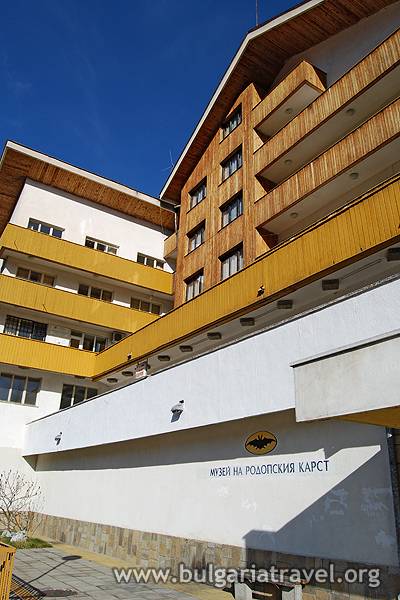
Bulgarian Karst Speleology Museum in Chepelare.
During the summer , the rhodope mountains they are even more spectacular than in winter. Still spending a week every summer there for several years, there are always new places to discover, like this unusual Museum that I am going to present here. It is the Bulgarian Karst Speleology Museum, also translated from the Bulgarian language as Bulgarian Karst Museum, found in the small town of Chepelare, of some 6.000 population, located in the heart of the Rhodope Mountains, a 70 km south of the famous Bulgarian city of Plovdiv.
What drives us to visit a type of museum as peculiar as this one: Well, our passion and curiosity to enter a cave and search in the dark for the secrets and beauties of the subsoil, discover curious rocks and marvel at what water can create during millennia of non-stop work.
Bulgarian scientists and speleologists have been exploring the caves of Bulgaria for the last 60 years. Speleology Clubs have not only explored the caves, but they have also sought the easiest way to access the depths of the subsoil for non-experts. You can find more information about the Caves of Bulgaria by opening this link (It is an information from the Bulgarian Ministry of Tourism): Caves of bulgaria.

Chepelare (click to enlarge the photo)

But why is this Museum located precisely in this small isolated town between mountains? The reason goes back to 1950 when a young teacher from the area, called Dimitar Raichev, created a group-school of Geology and began to explore the caves of the region, nail 200 caves in these Rhodope Mountains were visited during the following 5-6 years, some of them are accessible to tourists today such as: Yagodinska, Diavolskoto Gurlo and Ouhlovitsa . Years later, With the help of other enthusiastic Bulgarian scientists and patrons, the Speleology Club was created and a Speleology exhibition opened to the public in 1968 to showcase the findings of these intrepid researchers. Finally in 1980 the Bulgarian Karst Speleology Museum of Chepelare which we refer to here was officially opened.
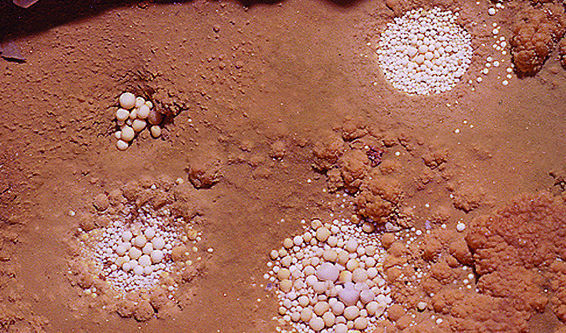
Pisolitas (cave pearls). Not as precious as sea pearls, however they are created on a similar basis when calcite crystallizes around a grain of sand. Author: Penka Angelova
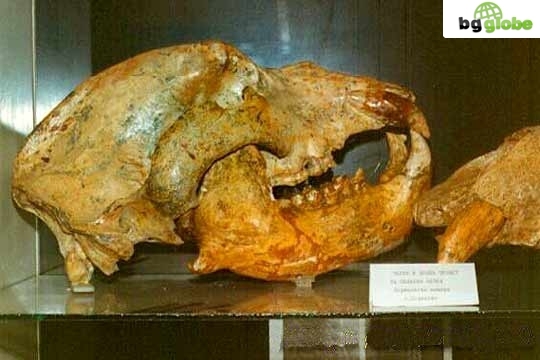
Cave Bear Skull
The Museum is located inside a large white building with views of the mountains surrounding Chepelare. Upon entering we discover that its rooms are dark, some finds are shown on the roofs and floors themselves, which helps to reproduce the atmosphere of an authentic cave.
The Museum houses a splendid collection of minerals: limestone, karst rocks, stalactites, crystals, pisolitas (or cave pearls) and many other types of rocks.

Bats. In the caves of Bulgaria are found 24 different species.

Insect “svetlomrazets”, endemic species found only in Ledenika cave (Vratsa-Bulgaria) and that dies if exposed to light. Author: Penka Angelova
Bats have their own space in this Museum, as well as some invertebrates, one of the most interesting specimens is the grasshopper "Svetlomrazets" (translated: who hates light) and that dies in contact with the light. Of course we can see bones of some animals found inside the caves. The most relevant is the jaw of a cave leopard, dating from ago 15-17.500 years, making it the oldest found in all of Europe. There is also a jaw of a woolly rhino, and various bones of prehistoric horses and bears. The fully recovered remains of the original bones of a cave bear dating back to 14.000 years of antiguaty. The cave bear was a huge mammal, greater than the current bear, that reached the 4,5 standing height meters. The animal disappeared after the last ice age on Earth.
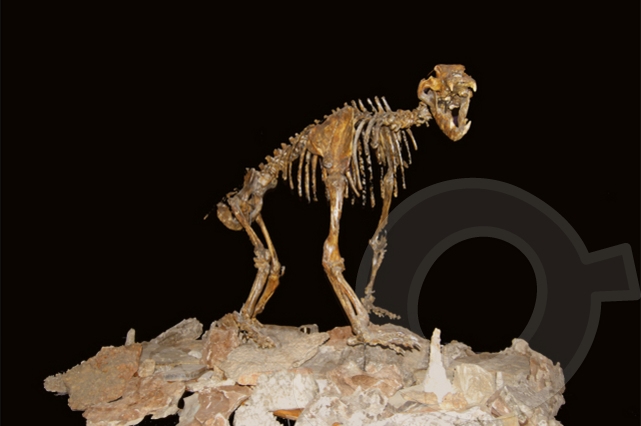
Complete skeleton of Oso cavernario
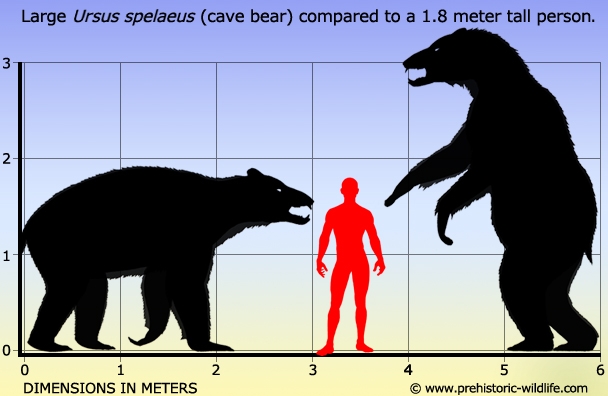
Comparison human-cave bear
A separate section is dedicated to Archeology, showing around 100 Paleolithic and Neolithic era finds of prehistoric humans, from the first tools of wood and stone, going through the bone, ceramics, up to bronze…
Throughout the year the Museum is visited by schoolchildren so that they can learn about the richness of the subsoil of their country. In Spring and Summer it is also a must for tourists who are fond of Speleology and Caves, who can enjoy here a whole Museum dedicated exclusively to their passion for this hidden world.…
Fact sheet of the Bulgarian Museum of Karst Speleology in Chepelare.
The Museum offers guided tours in German, English, Russian and of course Bulgarian, in addition to readings and video projections. Guides can be hired to visit caves in the region. The Museum has an assembly hall 60 seating for presentations and seminars. There is also a counter for the sale of souvenirs related to the theme of the museum.
Location: 7-a, Shina Andreeva Street, Chepelare, Bulgaria.
Tel:+359 3051 2041, +359 3051 304.
Opening hours from Tuesday to Sunday: of 9:00 a 12:00 and of 13:30 a 17:30 hours. Closed on mondays.
Museum funds: 9.400 findings, 730 volumes of scientific literature, a laboratory, also a sample of finds from abroad.
Museum surface: 870 square meters divided into the following sections:
– geology: general mineralogy, cave mineralogy and petrography:
The collection includes minerals from the Rhodope region such as quartz, aguamarina, tourmalina, Garnet, amethyst, opal, calcite, also cave minerals (plasters, fluorita..), magmatic minerals (granite, daikova rock,..), sedimentary rocks (some with fossilized flora), Metamorphic rocks (gneis, shale,…), etc…
– Geomorphology: surface karst and underground karst:
This section exposes surface karst rocks as limestone, plasters, Jurassic limestones, travertine, gap, marble, as well as secondary karst rocks such as stalactites, stalagmites, pisolitas, crystallactites, corals, etc…
– Biospeleology:
This section shows 40 arachnid species of the troglophilius species, as well as 10 Chiroptera species (bats): Myotis blythi, Myotis daubeutoni, Myotis mystacinus, Pleootus austriacus, etc….
The samples have been collected in the caves of Temnata dupka, Dushinka, Yagodinska , Glacier, Kaluger's hole, Gradeshtnitsa, all in Bulgaria.
– Cave paleontology:
Bones of animals that lived in caves during the Ternary era are shown. The most prominent examples have been mentioned above….
– Cave archeology:
A collection of more than 100 finds from the Paleolithic and Neolithic Era, found in caves that were once inhabited. Tools and belongings found in the Yagodinska cave and in the villages of Trigrad and Zabardo are exhibited.

Sofia Mineralogy Museum (Bulgaria)
And if you want to see more “stones” we recommend you visit the Sofia Mineralogy Museum, that apart from its splendid collection of minerals has a retro atmosphere, in the style of American archaeological museums that we see in the movies…
Latest Articles

Bulgaria: Origin of the Goths and other ancient civilizations.
6 from October 2022
The Goths are considered as a people of Germanic origin but it is time to establish that the origin of the Goths is in the Balkans..

Why do Tourism in Bulgaria?
7 September, 2022
Thinking of sightseeing in Bulgaria? ️ What you should know: some peculiarities of the country that the travel guides do not tell you.

Rila monastery
17 Abil, 2022
Rila Monastery in Bulgaria: Location, his story, hiking trails in the surroundings, schedules and more.

What to see in Bulgaria in 12 days ?
12 from December 2021
The best travel route to visit Bulgaria in 12 days: the best cities, typical towns, monasteries, the Black Sea Coast.

Sandanski City.
17 of May 2021
How to get. Where to stay. To do. Places of interest. Hotels-spa. Swimming pools. Excursions to Pirin mountain. And more...

City of Veliko Tarnovo
27 of March 2021
Veliko Tarnovo, a fascinating city whose visit must be planned in advance. Read our proposal of where it is better to stay and how to get there by car

Viajes fly and drive , What should you know?
26 February 2021
Advantages and disadvantages of fly and drive or self-guided trips and details that nobody tells you but you should know before traveling

Bike tour organized by Bulgaria
16 February 2021
An entire MTB adventure for you and your friends on this organized bike trip with a local guide through the mountains of Bulgaria
Send a reply