
Differences between types of yoga: Satyananda, Hatha, Raja, Nidra, Kundalini, Nothing and Meditation
Types of Yoga.
Summary of contents of this page:
Types of Yoga there are many and varied, you could make a list of more than 30 types of Yoga, some of them only have slight differences from each other, but here we are going to give information about the types that can currently be considered the most useful, and what are the ones we practice in our Yoga Retreat, Hiking and Hot Springs. Specific, then we will explain the differences between the types of Yoga : Satyananda, Hatha, Raja, Kundalini, Nidra, Nothing and Meditation.

Satyananda Yoga

Maestro Sri Swami Satyananda Saraswati (1923-2009).
Satyananda yoga is a type of yoga created by Sri Swami Satyananda Saraswati and developed by his disciples, incorporating practices based on ancient and traditional sources. Satyananda Yoga uses the practices in a traditional way, “asanas” ( the postures) to balance the body and mind through the human body, “pranayama” (or breathing practices) to work in the energy field of the body (similar al “Ki” The “Chi” of other methods) and use meditation to calm and focus the mind. It also takes a more comprehensive perspective to teach and encourage the yogic lifestyle., taking yoga as a base but applying it to all the daily aspects of our daily life. The Satyananda Yoga Approach Treats the Whole Person, not only to the body, there is also an emphasis on awareness and Satyananda yoga practitioners are encouraged to learn about all aspects of their personality.
Hatha Yoga
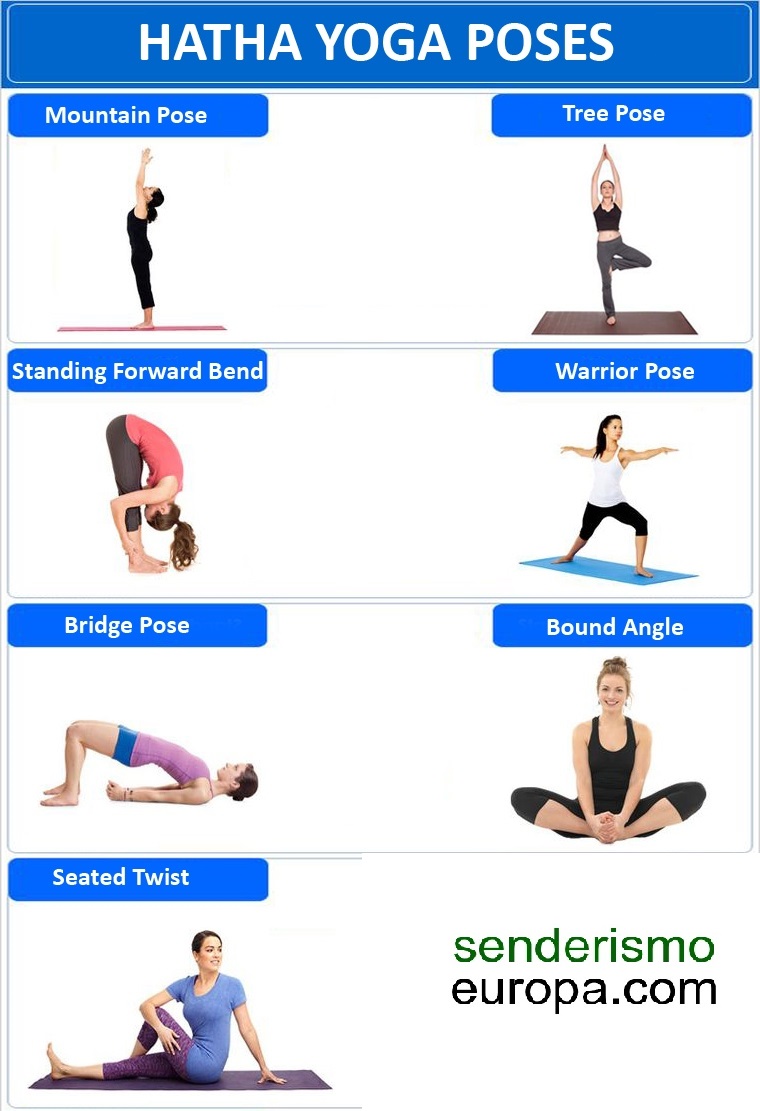
Hatha Yoga postures
The term Hatha Yoga has been commonly used to describe the practice of asana (postures). Syllable “he has” of “Hath” refers to the pranic force (vital) that governs the physical body and the syllable “tha” on his side the chitta force refers (mental) so Hatha Yoga is a catalyst for the awakening of the two parts that affect our life: body and mind. More concretely, the techniques described in Hatha Yoga harmonize and purify the body systems and focus the mind in preparation for more advanced practices of the chakra and kundalini type.
The Hatha Yoga system includes asana (postures) along with the six shatkarmas (physical and mental detoxification techniques), mudras y bandhas (psychophysiological energy release techniques) and pranic awakening practices. The fine-tuning of the human personality at increasingly subtle levels leads to higher states of consciousness and meditation.. Hatha Yoga has been described in several classical texts, como en Hatha Yoga Pradipika y Gherand Samhita .
 Raja Yoga

Raja Yoga generally refers to the yoga system described in the Yoga Sutras books by Indian author Sage Patanjali. In this ancient text, Sage Patanjali describes eight stages of yoga which are collectively known as Raja Yoga..
Raja Yoga is a comprehensive yoga system that is based on the following concepts: the refinement of human behavior and personality through the practice of yamas (or restriction) and niyamas (the disciplines); achieving physical health and vitality through asanas (postures) y pranayamas (pranic breathing techniques); the management of mental and emotional conflicts and development of awareness and concentration through pratyahara (sensory withdrawal) y dharana (concentration); and the development of the creative aspect of consciousness through dhyana (meditation) y samadhi (absorption into universal identity).
Kundalini Yoga
According to this type of Yoga, the path of yoga is a series of stages, in which the progressive awakening of the chakras corresponds to these stages. Kundalini yoga refers to the chakras located in the specific areas of the body that control the circulation of prana (or vital energy) that permeates the entire structure of the human body. According to this type of Yoga, the chakras are beyond normal perception. In each person, there are countless chakras. Nevertheless, only a few main ones are used in yogic practice. These few however cover the entire spectrum of the human being from the grossest to the most subtle. These main chakras are: Mooladhara, Swadhisthana, Manipura, Anahata, Vishuddhi, Ajna and Sahasrara.
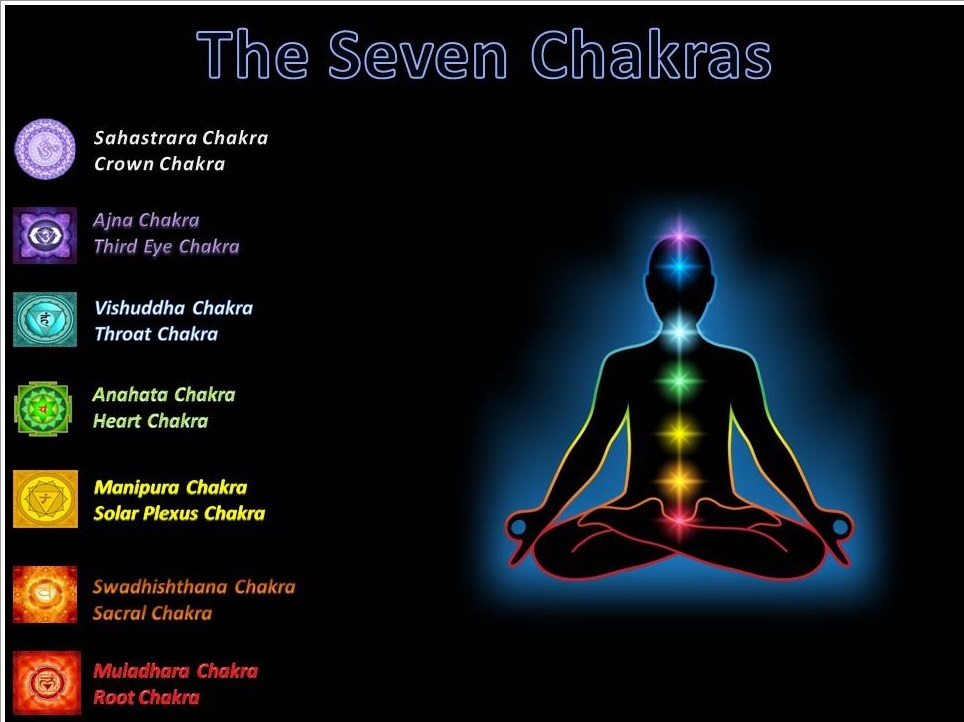
These chakras are bipolar, that is to say, they imply two things: Subtle energy centers (o Prana) within the pranic body of the human being, each chakra is associated with pranic energy (vital energy) at very specific levels and subtleties, each chakra is a gateway to specific levels of the mind.
Progressively higher states of consciousness. That is to say, the chakras symbolize different levels of consciousness in man from the most instinctive states associated with the mooladhara chakra to the most intuitive states associated with the ajna chakra. They symbolize the spiritual path.
These two aspects are closely related to each other since the manipulation and control of prana (vital energy) in any of the centers it will induce a corresponding state of consciousness. Conversely, a specific state of consciousness will induce prana to predominate in the corresponding chakra. Each is directly related to the other.
According to Kundalini Yoga, physical or mental stimulation of the psychic centers can lead to changes in consciousness.. This awakens the psychic potential in the human being and gives him a greater vision of his own reality.. This is the ultimate purpose of Kundalini yoga, provide a basic understanding of the chakras and their physical location on the body.
Yoga Nidra
Satyananda Yoga Nidra was devised by the Indian Sri Swami Satyananda Saraswati (also creator of Satyananda Yoga, mentioned first) from traditional tantric practices and has had a great impact in the world of Yoga. Yoga Nidra is a pratyahara technique (sensory withdrawal) in which distractions of the mind are limited and the mind is allowed to relax. This practice has had a profound transformative effect on the practitioners who have carried it out..

Yoga Nidra: conscious sleep.
In general, people feel that they are relaxing when they rest in an armchair with a cup of tea or coffee., a drink or a cigarette or read a newspaper or turn on the TV. But this, in fact, it's just a sensory distraction. True relaxation is an experience far beyond all this. For absolute relaxation one must remain attentive to your “dynamic sleep state”.
Yoga Nidra is a method to induce physical relaxation, complete mental and emotional. During your practice, one seems to be asleep, but yet consciousness is functioning at a deeper level.
Meditation
The maestro Swami Niranjanananda Saraswati (the successor of Swami Satyananda Saraswati) taught many concentration and meditation techniques developed by the Satyananda Yoga tradition from ancient scriptures. These practices of pratyahara (calm the mind), dharana (concentration), dhyana (meditation) and laya yoga techniques are all derived from the Upanishads, the Tantras and other ancient traditions. All these meditation techniques have different levels and stages of practice..
Below are descriptions of some common Yoga Satyananda meditation techniques:
- Antar Mouna deals with the activities of the conscious mind. In Antar Mouna there is awareness of thoughts and mental activity. The technique involves creating, transform and, Finally, gain control of thought processes.

- Ajapa Japa is a practice of repetition of mantras with awareness of the breath in the psychic passages. The mantra can be the personal mantra given by a guru or the universal breath mantra ‘So-Ham’ whose spontaneous repetition is the core of the Ajapa Japa technique.
- Trataka involves looking at a point, usually a candle flame, to induce relaxation and concentration of the mind. It is described in numerous scriptures, although it is generally known by other names and varies according to traditions. In the classic hatha yoga text, Gherand samhita, is classified as one of the sharkarmas. Because the other five practices of the shatkarmas (neti, Fare, Suffice it, Kapalbhati) are related only to cleaning the body, Trataka seems completely out of place, an anomaly in fact. In some way, Trataka acts as the bridge between Hatha yoga and Raja yoga.
Nothing Yoga
Nada yoga is a different path from yoga. It is closely related to the mantra yoga, japa yoga, the kirtan, music and any other practice related to sound. Nada yoga is a simple but powerful practice. It is a method of tracking sound through its psychic manifestation.

According to traditional yogic scriptures, the brahman nothing (transcendental sound) It is the seed of the world that manifests itself from the visible to the invisible.
There are two parts to this ancient practice:
- The journey begins from the external sound to the internal path. One of Nada yoga's external practices, namely, “Bhramari pranayama”, it is an excellent method to settle the mind and eliminate serious tensions. Thus, can be used as a method to prepare the mind for other meditation practices, or simply as a method to gain peace of mind in times of stress.
- While the other practice is a powerful but simple method of revealing the mysteries of your inner being.. One rises to the heights of inner space. Any of the basic benefits that we have listed for other meditative practices can be obtained from Nada yoga sadhana.
Join our Yoga Retreat and you will be able to personally discover the differences between the types of Yoga that we have described in this article. All levels are admitted and you will leave with a good knowledge of these types of Yoga so that later you can continue developing the most appropriate for you.. Contact us for more information at: [email protected]
Latest Articles

Bulgaria: Origin of the Goths and other ancient civilizations.
6 from October 2022
The Goths are considered as a people of Germanic origin but it is time to establish that the origin of the Goths is in the Balkans..

Why do Tourism in Bulgaria?
7 September, 2022
Thinking of sightseeing in Bulgaria? ️ What you should know: some peculiarities of the country that the travel guides do not tell you.

Rila monastery
17 Abil, 2022
Rila Monastery in Bulgaria: Location, his story, hiking trails in the surroundings, schedules and more.

What to see in Bulgaria in 12 days ?
12 from December 2021
The best travel route to visit Bulgaria in 12 days: the best cities, typical towns, monasteries, the Black Sea Coast.

Sandanski City.
17 of May 2021
How to get. Where to stay. To do. Places of interest. Hotels-spa. Swimming pools. Excursions to Pirin mountain. And more...

City of Veliko Tarnovo
27 of March 2021
Veliko Tarnovo, a fascinating city whose visit must be planned in advance. Read our proposal of where it is better to stay and how to get there by car

Viajes fly and drive , What should you know?
26 February 2021
Advantages and disadvantages of fly and drive or self-guided trips and details that nobody tells you but you should know before traveling

Bike tour organized by Bulgaria
16 February 2021
An entire MTB adventure for you and your friends on this organized bike trip with a local guide through the mountains of Bulgaria
Send a reply