
Other reasons to travel to Bulgaria, the Museums of Bulgaria
Another reason to travel to Bulgaria is undoubtedly its museums. Both its archaeological and artistic museums. On this occasion we are going to talk about several of the best museums that exist in Bulgaria. Both historically, as archaeological and artistic. If hiking is not your thing and you like a quiet trip through the old cities more, here we offer you a perfect alternative to traditional cultural tourism. The museums of Bulgaria.

We start by talking about National Archaeological Museum of Bulgaria , the museum is located in the capital of the country, Sofia, in what was an old Ottoman mosque, right in front of the country's presidency building. This mosque was built back in the year 1474 and became first the home of the National Library and then the 1893 would become the National Archaeological Museum. Although it would not be until 1905 when would its official inauguration take place, ca charge of King Fernado I of Bulgaria. At first it was made up of separate collections that were exhibited in different parts of the city.
The museum has 5 Exhibition halls:
The main room: In this room we mainly find remains of Romanian culture, tombs and funerary stelae, pottery and some Roman jewelry. The sculpture of a Thracian horseman also stands out in this room..
The Prehistory room.
The Middle Ages Room. Ceramic icon from the 10th century in the rooms dedicated to the Middle Ages.
The Hall of Treasures, that count among their treasures with the "Treasure of the Thracians" In this room is one of the main pieces of the museum, Shipka's Funeral Mask, a Macedonian helmet and laurel wreath
The Hall for temporary exhibitions.

The next museum in bulgaria that we are going to visit is The National Museum of Bulgarian History this is the biggest museum in bulgaria, it is also in the capital, outside, specifically to 7 kilometers from the old town. The museum as such would not be created until the year 1973 on the occasion of the commemoration of the creation of the Bulgarian state 1,300 years ago, and it does not take its current location in the former offices of the president of the government until the year 2000. The museum only exhibits the 10% out of a total of six hundred and fifty thousand pieces.
The exhibition is distributed between 3 plants that are ordered by dates and times. The ground floor is dedicated to merchandising and there is some other cafeteria. The exhibitions take place on the first and second floors. On the first floor are the rooms dedicated to prehistory, ancient Thracians and classical times, Medieval Bulgaria and Bulgaria in the period of the Ottoman Empire.
Stand out pieces like the sculpture of the Mother Land: a figurine of 14 centimeters of something and an age of more than 6000 years that was found in Targovishte on the outskirts of the city.
Other pieces to highlight on the first floor is a gold treasure from the Thracians from the 3rd century BC., or the Fresco of the Final Judgment of the seventeenth century that represents the theme of the Last Judgment.
The second floor is dedicated to the contemporary period from the independence at the end of the 19th century from the Ottoman Empire. We also find exhibitions of typical costumes and other temporary exhibitions.
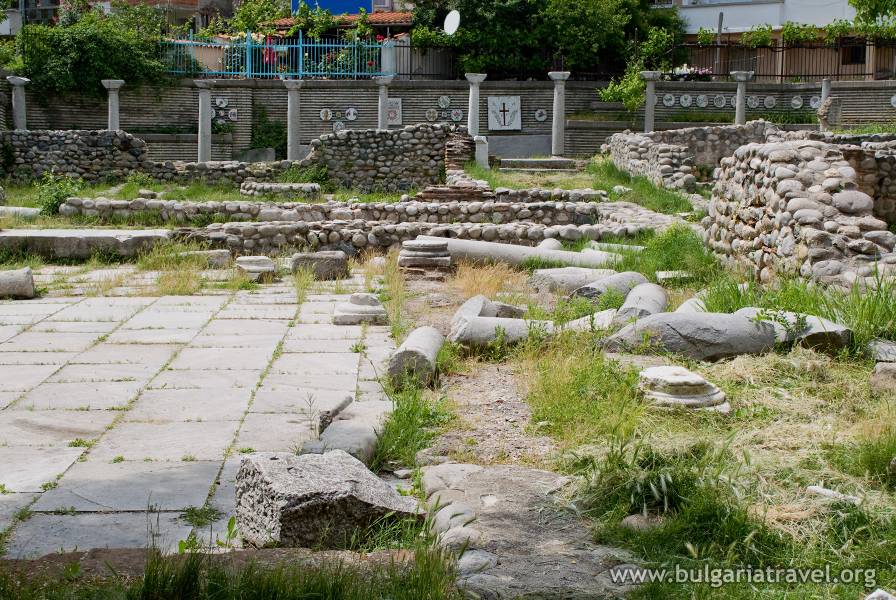
Another of Bulgaria's prominent museums is the Sandanski Archaeological Museum. Located in the Bulgarian town of the same name. It is located on the main street of the city, and occupies what was a Roman site. It has a wide collection of marble reliefs in which different scenes from the life of the Thracian horsemen are represented, It also highlights a tomb of an infant and an important piece of soil from an ancient Roman city with a swastika in the center. In the museum we can obtain information on other sites of the classical period existing in the area. At the exit of the museum we can also find the remains of a Christian basilica from the 4th century.

Finally let's talk about The National Art Gallery of Bulgaria. With its more than 50.000 artistic pieces, It is the main exhibition of Bulgarian art in the whole country. This museum like several of the ones we have described, it is also in the capital. It occupies what was the former Royal Palace of Bulgaria. He moved to the palace after the fall of the monarchical regime in 1946.
This building is a good example of the architecture of the so-called "Second Empire".
It was built in 2 phases, one in 1880 that lasts a few years, during the reign of Alexander I of Battenberg when Austro-Hungarian architects under Rumpelmayer began work on the building. This phase of the palace was finally inaugurated on 26 from December to 1882. The phase covers an administrative area located on the ground floor, above the ballrooms and the third floor for the service. In the second stage, during the reign of Tsar Ferdinand, the east wing of the palace was built under the supervision of the Viennese architect Grünanger who incorporated elements of the neo baroque of Vienna. In this area were the apartments of the royal family. In the painting gallery we find works by renowned Bulgarian authors such as Zahari Zograf, Nikola Tanev, Boris Denev, Christo Tsokev, Vassil Stoilov, etc. The exhibition of ancient art and iconostases is located in the crypt of the Alexander Nevsky Cathedral. in it more than two hundred pieces are exhibited throughout 1000 years.
Latest Articles

Bulgaria: Origin of the Goths and other ancient civilizations.
6 from October 2022
The Goths are considered as a people of Germanic origin but it is time to establish that the origin of the Goths is in the Balkans..

Why do Tourism in Bulgaria?
7 September, 2022
Thinking of sightseeing in Bulgaria? ️ What you should know: some peculiarities of the country that the travel guides do not tell you.

Rila monastery
17 Abil, 2022
Rila Monastery in Bulgaria: Location, his story, hiking trails in the surroundings, schedules and more.

What to see in Bulgaria in 12 days ?
12 from December 2021
The best travel route to visit Bulgaria in 12 days: the best cities, typical towns, monasteries, the Black Sea Coast.

Sandanski City.
17 of May 2021
How to get. Where to stay. To do. Places of interest. Hotels-spa. Swimming pools. Excursions to Pirin mountain. And more...

City of Veliko Tarnovo
27 of March 2021
Veliko Tarnovo, a fascinating city whose visit must be planned in advance. Read our proposal of where it is better to stay and how to get there by car

Viajes fly and drive , What should you know?
26 February 2021
Advantages and disadvantages of fly and drive or self-guided trips and details that nobody tells you but you should know before traveling

Bike tour organized by Bulgaria
16 February 2021
An entire MTB adventure for you and your friends on this organized bike trip with a local guide through the mountains of Bulgaria
Send a reply