
UNESCO World Heritage Sites in Bulgaria
List of UNESCO Places in Bulgaria.
Summary of contents of this page:
- List of UNESCO Places in Bulgaria.
- 1) Pirin National Park.
- 2) Rila Orthodox Monastery.
- 3) Primary beech forests of Bulgaria.
- 4) Thracian Tomb of Kazanlak.
- 5) Ancient city of Nesebar.
- 6) Srébarna Nature Reserve.
- 7) Thracian Tomb of Svechtari.
- 8) The Knight of Madara.
- 9) Rock Churches of Ivanovo.
- 10 ) Boyana Church in Sofia.
In Europe, more than 400 UNESCO World Heritage Sites and these include the 10 found within the territory of Bulgaria. From them 7 belong to the category of Cultural Heritage and 3 remaining to Natural Heritage. This is the complete list of 10 Unesco World Heritage Sites in Bulgaria and that below we will comment one by one in case you are interested in traveling to Bulgaria and include any of them in your Bulgaria travel circuit:
Cultural – The Knight of Madara.
Cultural – Boyana Church in Sofia.
Cultural – Rock Churches of Ivanovo.
Cultural – Thracian tomb of Kazanlak.
Natural – Srébarna Nature Reserve.
Cultural – Ancient city of Nesebar.
Cultural – Rila Orthodox Monastery.
Natural – Pirin national park.
Cultural – Thracian Tomb of Svechtari.
Natural – Primary beech forests of Bulgaria (together with other regions of Europe).
This list of UNESCO World Heritage Sites in Bulgaria is ordered according to the year they were declared a World Heritage Site., from oldest to most modern, but we are going to give you the ordered list according to your tourist interest (since this is a website focused on Tourism). In our humble way, the list of UNESCO World Heritage Sites in Bulgaria should follow the following order when it comes to having priorities to visit these places:
1) Pirin National Park.
Pirin National Park is mainly known for the 70 glacial lakes and their alpine-like landscape, but a wide variety of wild animals such as wolves can also be seen, Bears, owls, woodpeckers, etc. For many travelers Pirin is the most majestic and at the same time fearsome mountain. It is the second highest mountain in Bulgaria thanks to its Vihren peak (2.914 m) and the third highest mountain in the Balkan Peninsula: Mount Olympo in Greece is the second, and the highest is the Musala peak of 2.925 meters on Rila Mountain, also in bulgaria. More information here: Pirin National Park.
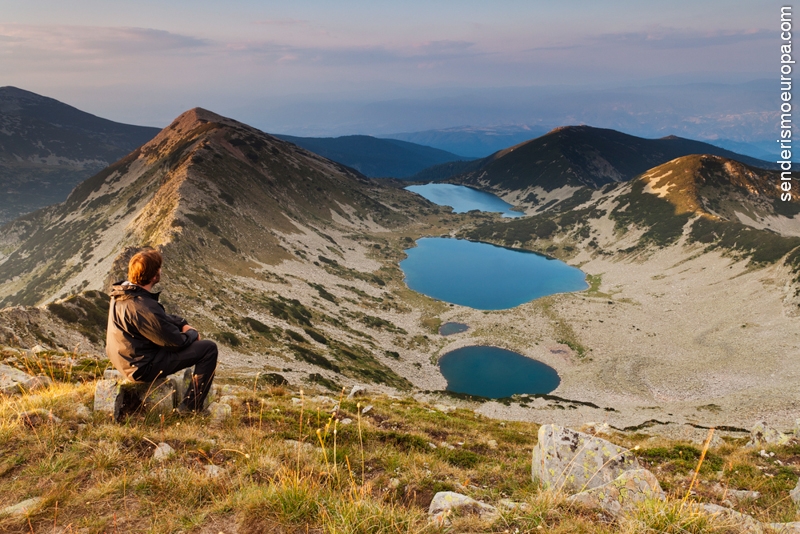
Man looking 3 of the many glacial lakes that can be found in the Pirin Mountains.
2) Rila Orthodox Monastery.
Apart from the religious component, the Rila monastery It is one of the symbols of the country due to its importance in the history of Bulgaria; It is the largest in Bulgaria and also stands out for its unique architecture and the rich decoration of its exterior and interior, unique in europe, just for this last you should not miss it. In fact it is the most visited place in Bulgaria.
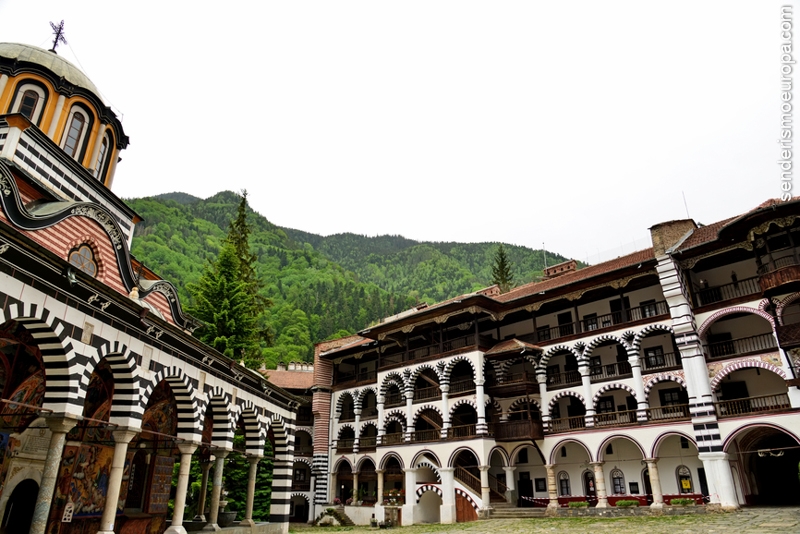
Courtyard of the Rila Orthodox Monastery
3) Primary beech forests of Bulgaria.
It shares this denomination within Unesco along with other European countries, including Spain, which also has within this group several forests classified as UNESCO World Heritage Sites.. What distinguishes the Bulgarian primary forests from the primary forests of the rest of the European countries is their great extension, since within this group, Bulgarian is the largest beech forest with 28.552 hectares. Specifically these forests, within the Bulgarian territory, are in the Central Balkan National Park.

4) Thracian Tomb of Kazanlak.
The tomb belongs to the type of vaulted tombs and covered by a mound of earth which is the typical Thracian burial architecture from the end of the 5th century to the beginning of the 3rd century BC.. The Kazanlak Tomb Monument owes its worldwide fame to the impressive mural frescoes in the corridor and vaulted chamber: one of the world's best preserved works of ancient wall art from the early Hellenistic period and which gives an idea of the prosperity and advanced development of this civilization, ancestors of present-day Bulgarians and that influenced other cultures and peoples of Europe.
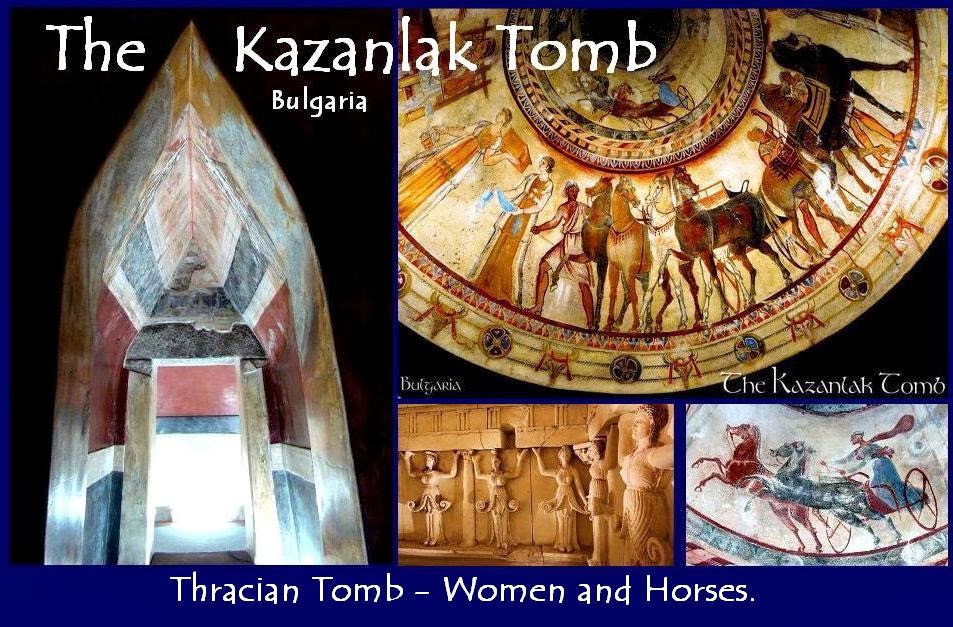
Images of the Thracian Mausoleum in Kazanlak.
5) Ancient city of Nesebar.
Nesebar is one of the oldest cities in Europe, founded ago 3.200 years. Currently its old town is a maze of pedestrian streets between picturesque old town-style houses and Byzantine-style churches. It is one of the most visited places by tourists in the country and very lively by restaurants and souvenir shops.. The old town is surrounded by the Black Sea and joins the continent by a narrow path that connects it with the most modern part of Nesebar where shops are located, hotels and two good beaches.
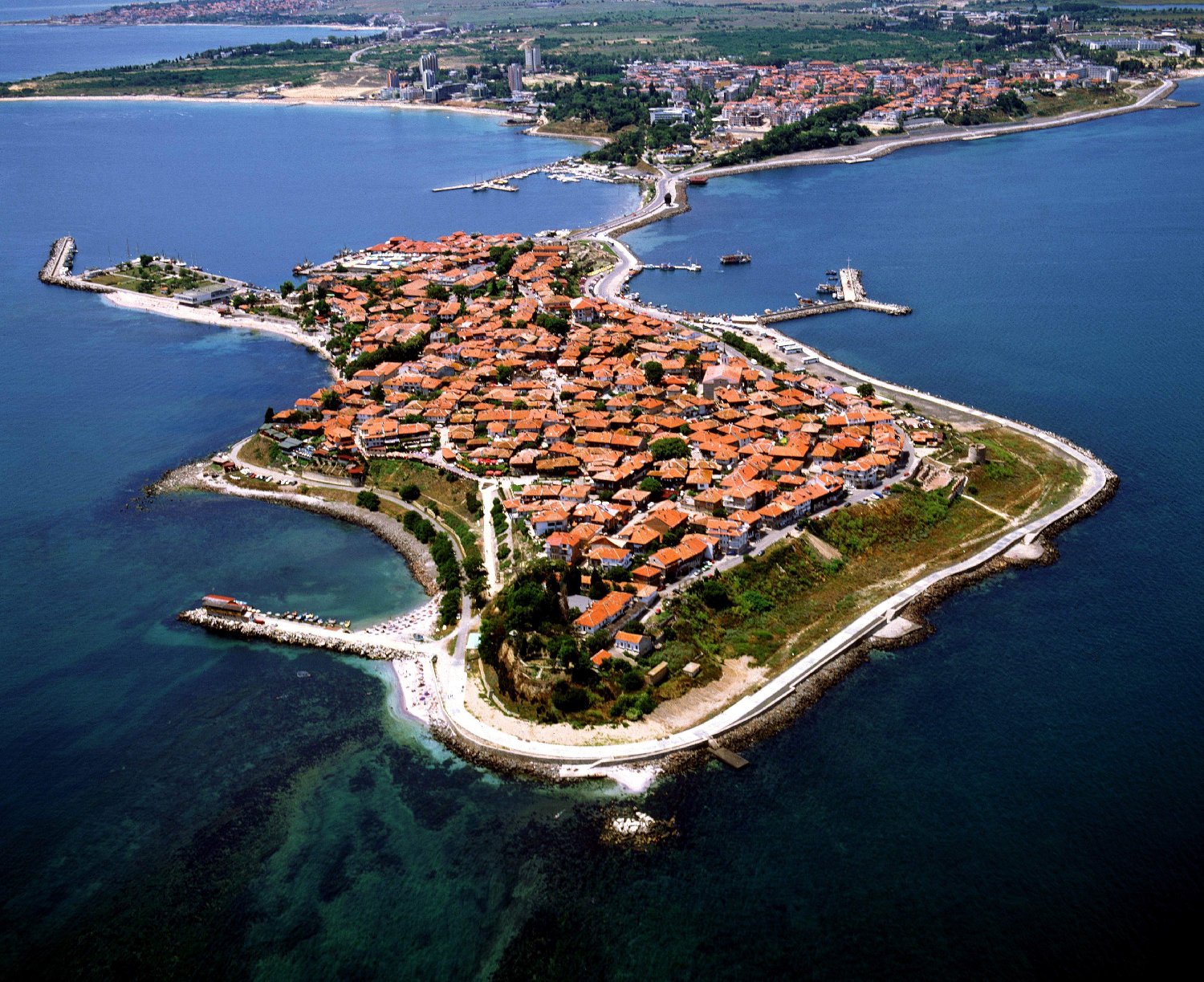
Nesebar Old Town
6) Srébarna Nature Reserve.
The Srebarna reserve is located at 2 km south of the Danube River and 16 km west of the city of Silistra, and is spread over an area of 600 hectares. Includes Lake Srebarna and the areas around it. Its importance is due, on the one hand, to your situation on the route of the migratory birds between Europe and Africa, call ” Pontic Way “, and, on the other hand, with the unique and diverse species of aquatic birds that it has. Some of the most remarkable species that can be seen in Lake Srebarna are the frowning pelican (Pelecanus crispus), with the largest colony in Europe up to 200 specimens, the little goose (Consider erythropus), the ducks (Anatidae), the mustachioed (Panurus biarmicus), the white heron (White sheep) and the white swan (Cygnus olor), pygmy cormorant (Phalacrocorax pygmeus) and others. Due to the rare and endangered bird species that can be found here, Srébarna was included in the list of UNESCO World Heritage Sites in Bulgaria .

7) Thracian Tomb of Svechtari.
This 3rd century BC tomb. It is the highest example of the architectural style applied by the Thracians in the construction of their religious buildings.. The architectural decoration of the tomb is unique, with its frescoes and its ten polychrome caryatids, half women and half plants. These ten female figures carved in relief in the rock of the main chamber, like the pictorial decoration of the vault, they are the only artistic examples of this style that have been found so far in what was the former territory occupied by the Thracians and which is now Bulgaria.

Thracian Tomb of Svechtari
8) The Knight of Madara.
Madara's Rider is carved out of a majestic rock through 23 meters high, It is a specimen of early medieval Bulgarian art. The relief represents a horseman in scale 1:1 with a spear in hand. Under the horse a lying lion is sensed and behind the rider, like running after him, there is the figure of his hunting dog. According to the legend, a king was hunting on the plateau but fell off the rocks and died. Their families, in his honor, asking an artist to carve his image into the rock. Historians associate the image of the Madara rider with some of the ancient Bulgarian kings: Khan krum (ruled between 803 and 814), Hello (ruled between 701-718), Asparagus (681 – 701) and even with the god Tangra (ancient supreme deity of the Bulgarians). This rocky relief is unique in all of Europe and is therefore listed by UNESCO as a monument of world importance.

Madara Knight
9) Rock Churches of Ivanovo.
The orthodox rock monastery of "San Arcángel Miguel" is located at 22 km from town of Ruse (Ruse is on the bank of the Danube river), and the closest town is Ivanovo, from which it takes its common name, although the Monastery is outside the town and within the territory of the Natural Park "Rusenski Lom". The monastery was founded in the early 13th century. The monastery was established as a spiritual and also formative center. For example, inscriptions on cell walls provide information on important historical events. The complex includes six temples where mural frescoes are preserved showing the style of Bulgarian religious pictorial art from the 13th and 14th century.. For example, the frescoes of the "Holy Virgin" Church are world famous among the followers of ancient art.. These mural frescoes belong to the most eminent examples of the Art of the Balkan Peninsula. Its high artistic value is the reason why the church complex was included in the list of UNESCO World Heritage Sites in Bulgaria .

Rock Churches of Ivanovo
10 ) Boyana Church in Sofia.
It is located in a neighborhood on the outskirts of the capital. Sofia. It was built in three stages: first stage in the eleventh century, second stage in the middle of the 13th century and third stage during the middle of the 19th century. The Boyana Church owes its worldwide fame above all to the mural paintings of the year 1.259, reflecting the outstanding achievements of medieval Bulgarian culture. The images recreated in this Church (240 nothing less) are characterized by their pictorial value and for being unique historical documents. Portraits of Church patrons, the sevastokrator (means feudal lord) Kaloyan and his wife Desislava, and the Bulgarian Tsar Constantino Asen Tij (who ruled between 1257 and 1277) and Tsarina Irina, They are some of the oldest preserved portraits of these historical figures in the world.
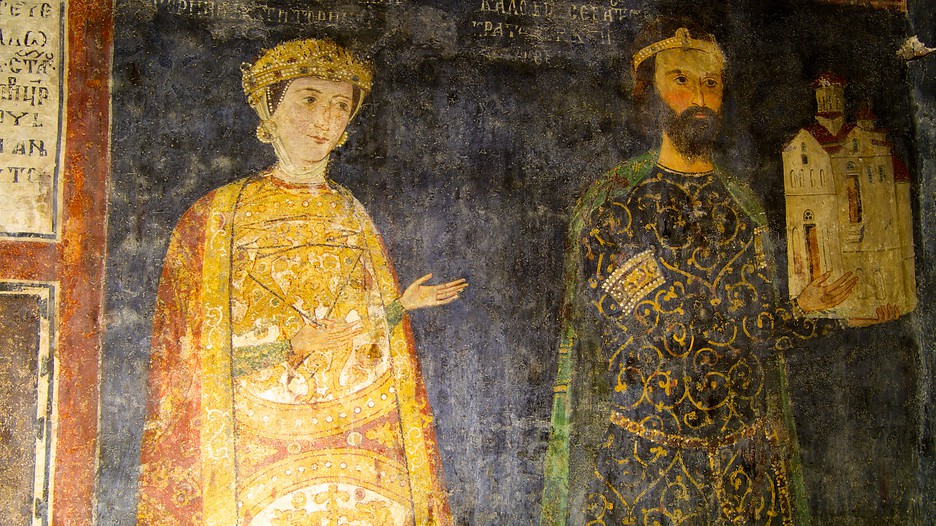
Frescoes from the Boyana Church in Sofia.
If you are interested in visiting any of these UNESCO World Heritage Sites in Bulgaria , please contact us and we will expand information and possibilities of our tourist services in Bulgaria. [email protected]
Latest Articles

Bulgaria: Origin of the Goths and other ancient civilizations.
6 from October 2022
The Goths are considered as a people of Germanic origin but it is time to establish that the origin of the Goths is in the Balkans..

Why do Tourism in Bulgaria?
7 September, 2022
Thinking of sightseeing in Bulgaria? ️ What you should know: some peculiarities of the country that the travel guides do not tell you.

Rila monastery
17 Abil, 2022
Rila Monastery in Bulgaria: Location, his story, hiking trails in the surroundings, schedules and more.

What to see in Bulgaria in 12 days ?
12 from December 2021
The best travel route to visit Bulgaria in 12 days: the best cities, typical towns, monasteries, the Black Sea Coast.

Sandanski City.
17 of May 2021
How to get. Where to stay. To do. Places of interest. Hotels-spa. Swimming pools. Excursions to Pirin mountain. And more...

City of Veliko Tarnovo
27 of March 2021
Veliko Tarnovo, a fascinating city whose visit must be planned in advance. Read our proposal of where it is better to stay and how to get there by car

Viajes fly and drive , What should you know?
26 February 2021
Advantages and disadvantages of fly and drive or self-guided trips and details that nobody tells you but you should know before traveling

Bike tour organized by Bulgaria
16 February 2021
An entire MTB adventure for you and your friends on this organized bike trip with a local guide through the mountains of Bulgaria
Send a reply